
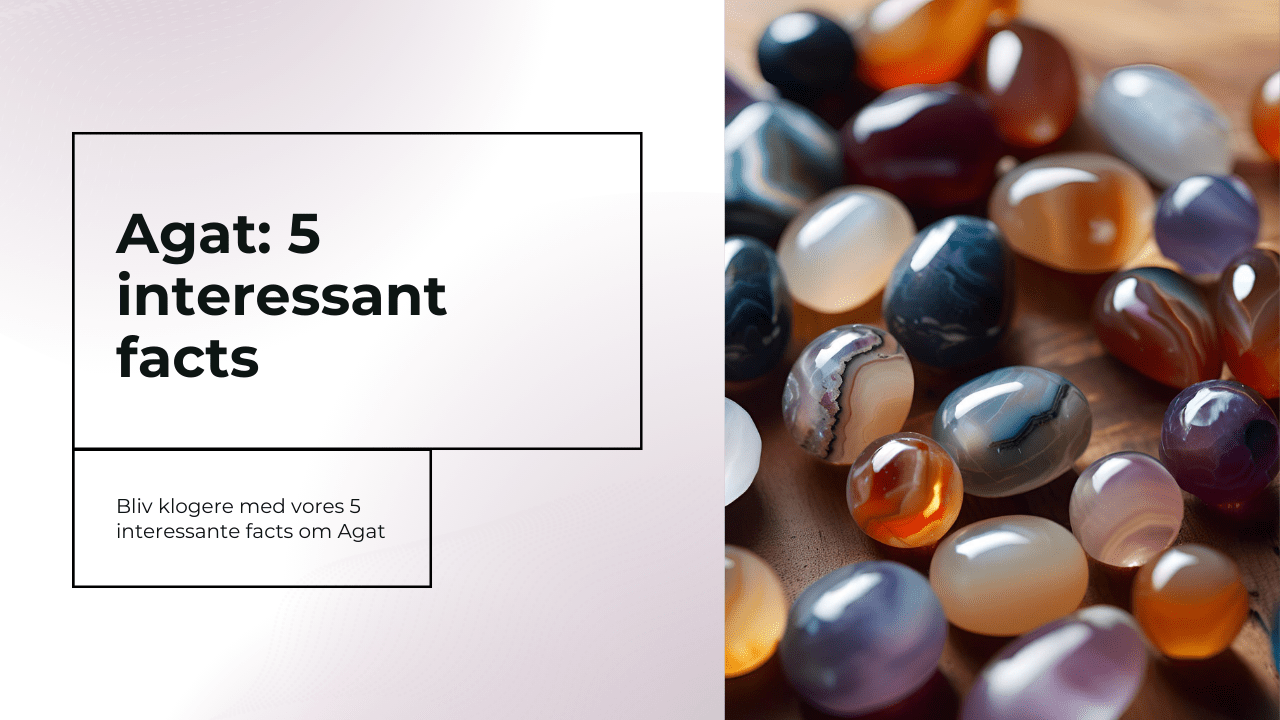

4. Agate is often found in volcanic rocks
Agates most often form in cavities in volcanic rocks such as basalt or in sedimentary rocks such as limestone. Silica-rich solutions seep into these cavities and deposit layers over time, resulting in the beautiful bands and colors we see in agates.
Many of the world's most beautiful agates come from Brazil and Uruguay, where volcanic activity has created perfect conditions for their formation.
-
Blue Lace Agate Beads – Faceted (3mm)
Regular price 138,00 SEKUnit price -
-
Heart-Shaped Crazy Agate Beads – Yellow, Faceted (6mm)
Regular price 153,00 SEKUnit price -
-
Crackle Agate Beads – Rondelle (14~15x9~10.5mm)
Regular price 307,00 SEKUnit priceLow stock (4 units) -
-
Dragon Vein Agate Beads – Green, Nuggets (12.5~17x11~20x6.5~11.5mm)
Regular price 245,00 SEKUnit priceVery low stock (1 unit) -
-
Dragon Vein Agate Beads – Blue, Nuggets (12.5~17x11~20x6.5~11.5mm)
Regular price 245,00 SEKUnit priceVery low stock (2 units) -
-
Dragon Vein Agate Beads – Blue, Lantern (19~20x14~16mm)
Regular price 307,00 SEKUnit price -
-
Dragon Vein Agate Beads – Cerise, Lantern (19~20x14~16mm)
Regular price 307,00 SEKUnit price -
-

Agate Beads – Brown, Round (8mm)
Regular price 107,00 SEKUnit price -

Agate Beads – Brown, Round (8mm)
Regular price 107,00 SEKUnit price -
Agate Beads – Yellow, Angular (18x13x5mm)
Regular price 153,00 SEKUnit price -
-
Moss Agate Beads – Faceted, Round (3mm)
Regular price 91,00 SEKUnit price -
-

Agate Beads – Color Mix, Faceted Round (7.5~8mm)
Regular price 107,00 SEKUnit price -

Moss Agate Beads – Green, Round (2mm)
Regular price 76,00 SEKUnit price -

-
Agate Beads – Crazy Agate, Faceted (8~9x7~8mm)
Regular price 184,00 SEKUnit price -
-

Striped Agate Beads – Green, Round (10mm)
Regular price 76,00 SEKUnit price -

Agate Beads – Blue, Round (10mm)
Regular price 76,00 SEKUnit price -

Agate Beads – Brown, Round (10mm)
Regular price 76,00 SEKUnit price -
-
-
Agate Beads – "Star Cut", Faceted, (10x9.5mm)
Regular price 107,00 SEKUnit price -


Thank You For Your Time!
I hope you learned a little something in today's blog post. If nothing else, I hope you found the post interesting.
It was lovely that you took the time to read along!
