
| Material | Best Suited For | Difficulty Level | Advantage |
|---|---|---|---|
| Elastic Cord | Bracelets without a clasp | Easy (Beginner) | Easy to put on/take off |
| Jewelry Wire | Necklaces & bracelets with a clasp | Intermediate | Very strong & durable |
| Silk Cord / Nylon | Beaded necklaces with knots | Advanced | Drapes beautifully & organically |
| Memory Wire | Fixed bracelets (bangles) | Easy | Holds its shape on its own |
FAQ – Frequently asked questions about beaded jewelry and jewelry making
What materials do you need to make beaded jewelry?
What materials do you need to make beaded jewelry?
To make beaded jewelry, you need at minimum beads, jewelry findings and something to assemble the piece with.
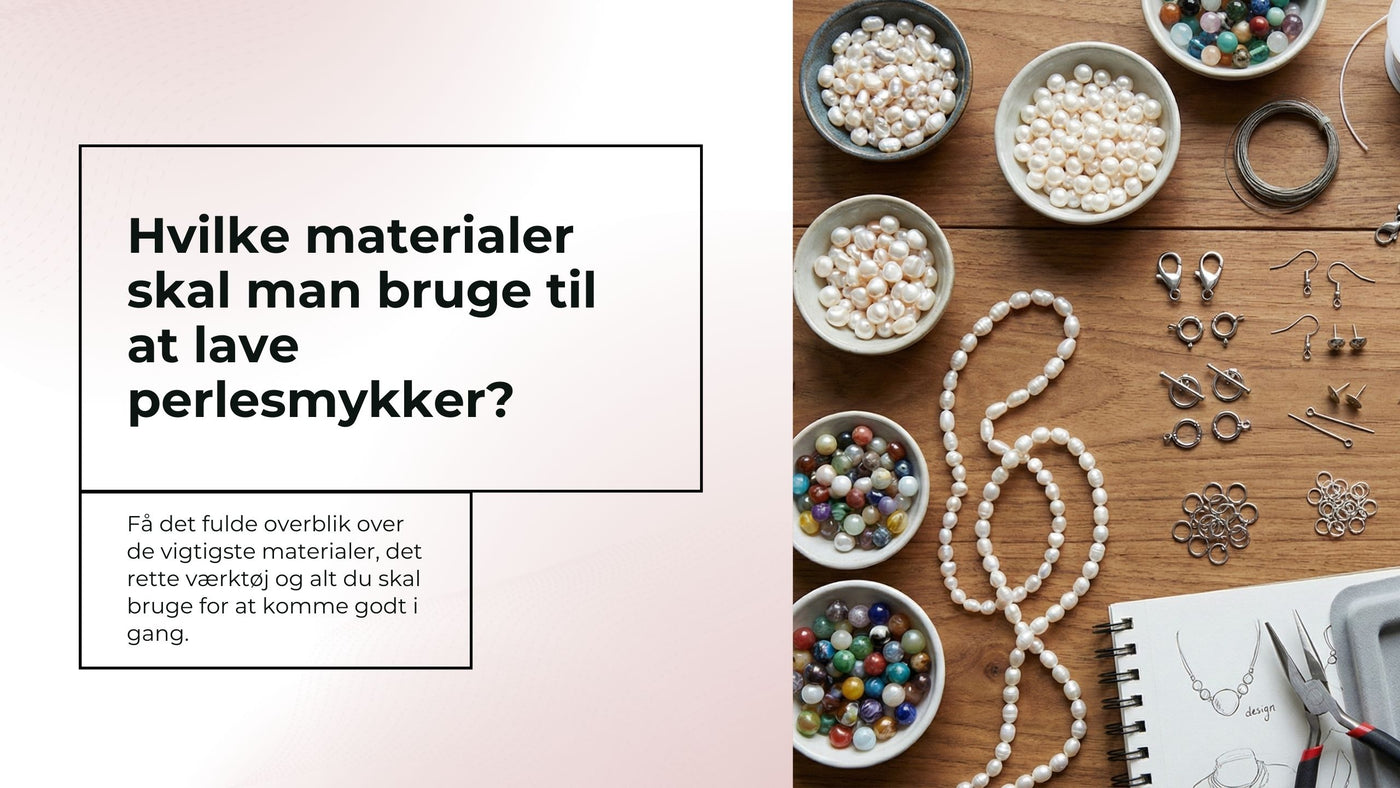
The most commonly used materials are freshwater pearls, shell pearls and semi-precious stones, clasps, ear hooks, head pins and either elastic cord, jewelry wire or chain. In addition, basic tools such as pliers are necessary to assemble the piece correctly.
Which beads are best for beginners?
Which beads are best for beginners?
Shell pearls and glass beads are often best for beginners because they are consistent, budget-friendly and easy to work with.
Freshwater pearls are also suitable, but they are often in a higher price range and require a little more attention when purchasing, as they can vary in both shape and hole size.
Can you make jewelry at home without professional tools?
Can you make jewelry at home without professional tools?
Yes, you can easily make beaded jewelry at home without professional equipment.
A simple set consisting of flat nose pliers, round nose pliers and side cutters is enough to make most bracelets, necklaces and earrings.
What's the difference between freshwater pearls and shell pearls?
What's the difference between freshwater pearls and shell pearls?
Freshwater pearls are natural pearls formed inside mussels and therefore vary in shape, size and appearance.
Shell pearls are made from shell material and coated with mother-of-pearl, which makes them completely uniform and more affordable. Both types are used in modern jewelry, depending on the desired style and budget.
Which cord should you use for beaded jewelry?
Which cord should you use for beaded jewelry?
The choice of cord depends on the type of jewelry and experience level:
- Elastic cord is often used for bracelets and is the easiest for beginners
- Jewelry wire gives a more stable and professional look
- Silk cord and nylon thread are used especially for classic beaded necklaces
Which jewelry findings are needed to make earrings?
Which jewelry findings are needed to make earrings?
To make earrings, you typically need ear hooks or ear studs, head pins (head pins or eye pins), jump rings and possibly pendants.
Together with the beads, these parts make it possible to create virtually any type of earring and smaller jewelry design.
Is it possible to start a jewelry brand with beaded jewelry?
Is it possible to start a jewelry brand with beaded jewelry?
Yes, many jewelry brands actually start with beaded jewelry.
By choosing consistent materials, focusing on quality, and creating a recognizable style, beaded jewelry can form the foundation for a small jewelry brand sold via social media, webshops, or markets.
Which materials should you choose if you want to sell jewelry?
Which materials should you choose if you want to sell jewelry?
If the jewelry is going to be sold, it is recommended to use stainless steel, waterproof steel, sterling silver, or long-lasting gold-plated jewelry findings.
Waterproof steel in particular is popular, as it is resistant to water, sweat, and daily use, while also retaining its color and requiring minimal maintenance.
These materials are more durable, hypoallergenic, and result in a more professional final product, which is well suited for both everyday use and sale.
What characterizes modern jewelry in 2026?
What characterizes modern jewelry in 2026?
Modern beaded jewelry is characterized by:
- Organic and imperfect beads
- Combination of beads and chains
- Layered styling
- Use of colored stones and pendants
This style is often seen among Danish jewelry brands today.
Where can you buy materials for beaded jewelry in Denmark?
Where can you buy materials for beaded jewelry in Denmark?
Materials for beaded jewelry can be purchased from specialty retailers such as Uniq Perler, which offers beads, jewelry findings, cord, wire, and tools all in one place – for both hobby use and more professional jewelry making.
Thank you for your time!
I hope you learned a little something in today's blog post. If nothing else, I hope you found the post interesting.
It was lovely that you took the time to read along!
